When a well pump dies, you have no water — which makes it the single most panic-driven purchase in rural homeownership. Panic is expensive. This guide gives you the realistic 2026 numbers by pump type and well depth, the diagnostic steps worth doing before you call, and the questions that keep a $1,800 job from becoming a $4,500 one.
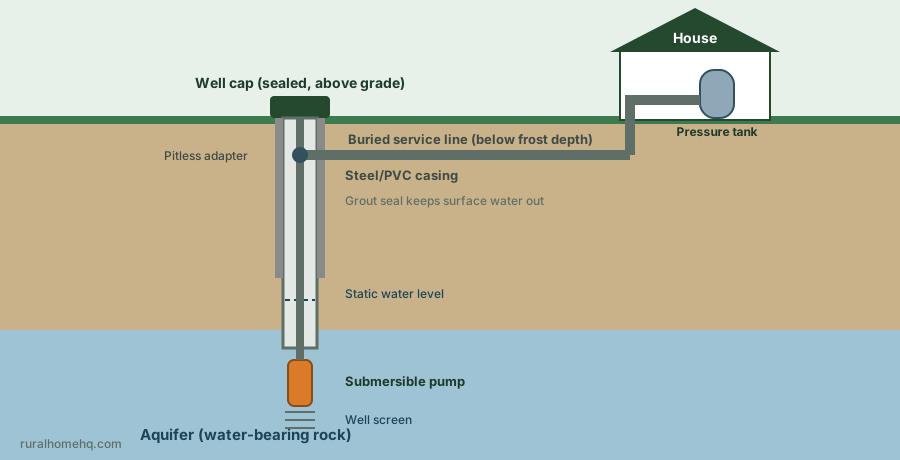
Well pump costs at a glance (2026, installed)
| Job | Typical range | Notes |
|---|---|---|
| Submersible pump, standard depth (100–250 ft) | $1,200 – $3,000 | Most common setup |
| Submersible pump, deep well (250–500 ft) | $2,500 – $4,500 | More wire, pipe, labor |
| Shallow-well jet pump | $600 – $1,200 | Above-ground, easy access |
| Deep-well (convertible) jet pump | $800 – $1,500 | |
| Constant-pressure / variable-speed system | $2,500 – $5,500 | Premium comfort option |
| Pressure tank replacement | $300 – $800 | Often bundled — usually rightly |
| Pressure switch / small controls | $150 – $400 | The lucky outcome |
| Well pump wiring repair | $300 – $1,200 |
What drives the price
- Depth: the dominant factor. Every foot means more drop pipe, more wire, and more labor — pulling a pump from 400 feet is a different job than from 80.
- Pump size: horsepower follows household demand and depth. Oversizing wastes money and short-cycles; undersizing runs constantly and dies young. Sizing follows from your household demand and well yield.
- Access: a wellhead in the open lawn vs. under a deck or in a pit changes labor hours.
- Emergency premium: no-water calls on weekends command 1.5–2× rates. A pump limping (cycling oddly, pressure swings) is worth fixing on a weekday schedule.
Before you call: the 10-minute checks
- Breaker and pressure switch: check the well circuit breaker; look at the pressure switch (usually by the pressure tank) for burnt contacts. A $20 switch fixes a surprising share of "dead pump" calls.
- Pressure gauge: if pressure sits at zero and the pump never kicks on, note it. If the pump cycles on-off rapidly (short-cycling), suspect the pressure tank, not the pump.
- Tank knock test: knock on the pressure tank — hollow on top, dull at the bottom is normal. Dull all the way up suggests a waterlogged tank: a $300–$800 fix that mimics pump failure.
Report what you found when you call — it signals you can't be sold a pump you don't need, and helps an honest contractor arrive with the right parts.
Avoiding the classic overcharges
- Get the diagnosis itemized: pump, tank, switch, and wiring are separate components — ask which one failed and how they verified it.
- Ask for the pump brand/model in the quote: pricing swings hundreds of dollars between builder-grade and premium pumps; you should know which you're buying.
- Warranty in writing: quality submersibles carry 3–5 year warranties; installation labor warranties vary widely and matter just as much.
- Two quotes when possible: even in an outage, a second phone quote based on your well depth and symptoms takes 15 minutes and anchors the price.
Related reading
- Well water testing: what, when, and how much
- Is your well keeping up with your household?
- Pump can't save it? What a new well costs (estimator)
Frequently Asked Questions
How much does it cost to replace a well pump in 2026?
Submersible pump replacement typically runs $1,200–$3,500 installed, depending on well depth and pump horsepower. Shallow-well jet pumps run $600–$1,500. Deep wells (400+ feet), constant-pressure systems, and emergency calls push toward $4,000–$5,500.
How long do well pumps last?
Submersible pumps typically last 10–15 years, jet pumps 8–12. Lifespan shortens with sediment-heavy water, frequent cycling (often caused by a failing pressure tank), and undersized pumps running constantly. Replacing a worn pressure tank on time is the cheapest way to extend pump life.
Why do I suddenly have no water from my well?
The usual suspects, roughly in order: tripped breaker or failed pressure switch (cheap), failed pressure tank or waterlogged tank (moderate), failed pump or pump wiring (expensive), or — least common — a dropping water table. Check the breaker and listen for the pump before assuming the worst.
Is it worth replacing the pressure tank with the pump?
Usually, yes, if the tank is older than 7–10 years. The pressure tank ($300–$800 installed) protects the new pump from short-cycling — the leading killer of pumps. Contractors bundle them for good mechanical reasons, not just upselling.