Nobody picks a septic system from a catalog — your soil picks it, your state's code confirms it, and you pay for it. But knowing the types before the site evaluation comes back changes you from a price-taker into an informed buyer. Here's every common system, what it costs in 2026, and the trade-offs contractors don't always volunteer.
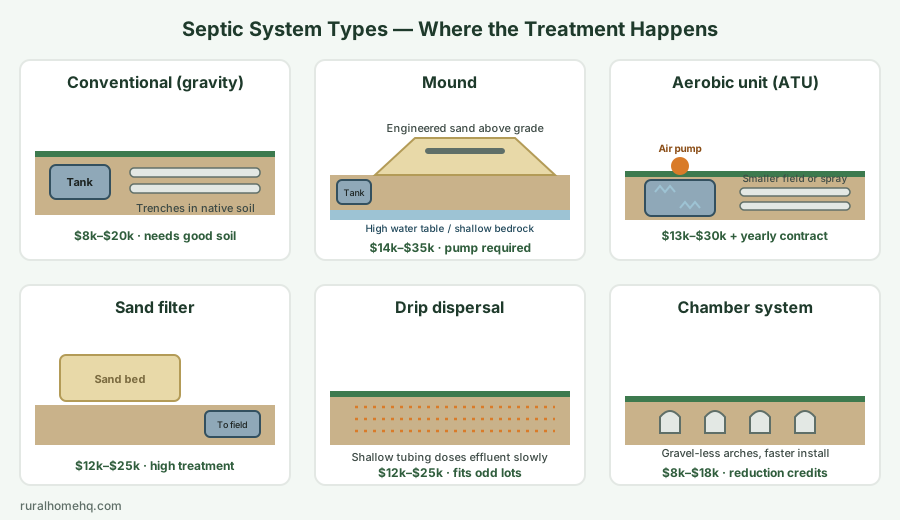
Quick comparison
| System | 2026 installed cost | Best for | The catch |
|---|---|---|---|
| Conventional (gravity) | $8,000–$20,000 | Lots with good perc results | Needs soil that qualifies |
| Chamber (gravel-less) | $8,000–$18,000 | Same sites as conventional | Modest cost difference; area credits vary by state |
| Mound | $14,000–$35,000 | High water table, shallow bedrock | Visible landscape feature; pump adds a failure point |
| Aerobic unit (ATU) | $13,000–$30,000 | Small lots, clay, reuse/spray areas | Electricity + mandatory maintenance contracts |
| Sand filter | $12,000–$25,000 | Sites needing higher treatment before dispersal | Pump + eventual surface-sand renewal |
| Drip dispersal | $12,000–$25,000 | Odd-shaped lots, shallow soils, slopes | Filters and dosing equipment need service |
Conventional: the default for a reason
Tank settles, gravity delivers, soil treats. No moving parts, nothing to power, decades of track record. If your soil qualifies, take it — the exotic systems below exist for sites that can't, not as upgrades. Chamber variants swap gravel trenches for plastic arches: faster install, and some states grant drainfield size reduction credits.
Mound: treatment above the problem
Where the water table or bedrock sits too close to the surface, the mound (a Wisconsin invention) builds the treatment zone above grade in engineered sand, fed by a pump. Proven across the upper Midwest, Pennsylvania, and lake country everywhere. Costs more, occupies visible yard, and the pump means an alarm worth taking seriously.
Aerobic treatment units: a miniature sewage plant
An ATU injects air to supercharge bacterial digestion, producing effluent clean enough for smaller fields or (in some states) spray distribution. Dominant on Texas clay, common on tight lots everywhere. The trade: electricity, parts, and legally mandated maintenance contracts. Buying a home with an ATU? Ask for the service records the way you'd ask for a car's.
Sand filters and drip dispersal: the engineered middle
Sand filters run effluent through a constructed bed for extra treatment before dispersal — common in Washington and coastal zones. Drip dispersal lays shallow pressure-dosed tubing that doses effluent slowly across difficult or irregular terrain — increasingly the answer on Tennessee clay and slopes. Both add equipment that needs periodic professional attention.
How the decision actually gets made
- Soil evaluation — perc rate or soil morphology determines what your ground can accept (estimate your field size).
- State and county code — your state's rules define which systems are approved for which conditions.
- Site constraints — setbacks, slope, lot shape, and existing wells narrow the map.
- Budget last — you pick among what survived steps 1–3. Get itemized bids on the full cost breakdown.
Frequently Asked Questions
What is the cheapest type of septic system?
A conventional gravity system — tank plus gravel trenches — at $8,000–$20,000 installed. It's cheapest because soil does all the work with no pumps or electronics. The catch: it requires soil that passes a perc test, which is exactly what many lots don't have.
Which septic system is best for clay soil?
Clay usually pushes you toward a mound system, drip dispersal, or an aerobic treatment unit with a reduced field — dictated by your local code and the site evaluation. Pure "best" doesn't exist: mounds are proven but visible and pricey; ATUs treat to a higher standard but add electricity and maintenance contracts.
Do aerobic septic systems really need maintenance contracts?
In most states that permit them widely (Texas most famously), yes — an ATU is a small treatment plant with an air pump, and codes commonly require professional inspection visits (often 2–3 per year, $200–$400/year). Skipping maintenance is how a $20,000 ATU becomes a failed system.
Can I choose which septic system type I get?
Only within what your soil and code allow. The site/soil evaluation determines the menu; you choose from it, usually trading upfront cost against footprint and maintenance. Where a conventional system is approved, it's almost always the right choice.