A new septic system costs $8,000–$20,000 installed for a conventional gravity system on a typical 3-bedroom home in 2026, with a national average around $12,000. Engineered systems for difficult soil — mounds, aerobic units, sand filters — run $15,000–$40,000+. Drainfield replacement alone runs $5,000–$20,000; tank replacement $3,000–$9,000.
Septic pricing is opaque, regional, and emotionally charged — you usually need the number when something has already gone wrong. Below: the full 2026 price table, the factors that push a quote from the bottom of the range to the top, and where homeowners get burned. Use it as your anchor before collecting quotes.
Septic system cost at a glance (2026)
| Job | Typical range | Notes |
|---|---|---|
| Conventional system, new install (3-bed) | $8,000 – $20,000 | Gravity-fed, decent soil |
| Engineered system (mound, aerobic, sand filter) | $15,000 – $40,000+ | Poor soil, high water table |
| Tank replacement only | $3,000 – $9,000 | Includes excavation and crane |
| Drainfield replacement | $5,000 – $20,000 | The big one — estimate your size |
| Baffle repair | $300 – $900 | Common, cheap, important |
| Septic pump replacement | $800 – $2,500 | For pumped systems |
| Riser installation (per lid) | $100 – $300 | Pays for itself in pumpings |
| Routine pumping | $250 – $600 | Estimate yours |
| Perc test | $450 – $1,500 | Required before install |
| Design + permits | $600 – $2,500 | Varies wildly by county |
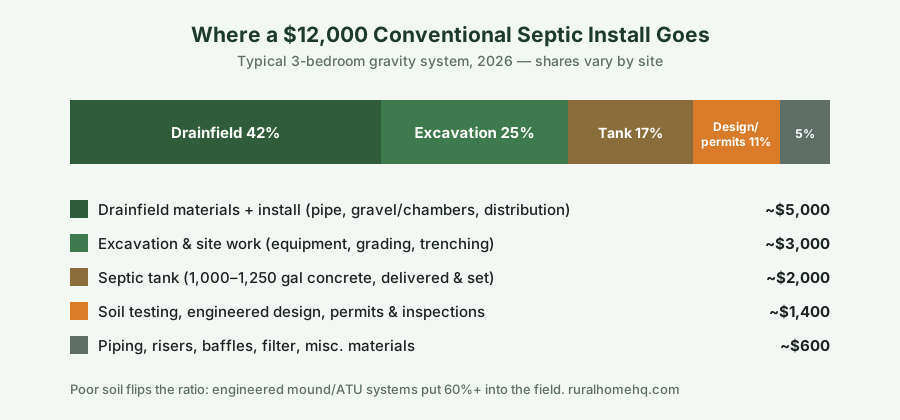
The single biggest cost factor: your soil
Before any system is approved, a soil percolation ("perc") test measures how fast water drains through your soil. Good perc results qualify you for a conventional gravity system — the cheap end of every range above. Poor results (clay, bedrock, high groundwater) force an engineered system (full comparison of every system type here):
- Mound systems ($15,000–$35,000): the drainfield is built above grade in an engineered sand mound. Common in the upper Midwest and areas with high water tables.
- Aerobic treatment units ($13,000–$30,000): use an air pump to treat wastewater to a higher standard in a smaller footprint. Add ~$300–$600/year in electricity, maintenance contracts, and inspections.
- Sand filter systems ($12,000–$25,000): wastewater filters through a constructed sand bed before dispersal.
Regional price differences
The same conventional install quoted at $9,000 in the rural Southeast commonly runs $15,000–$25,000 in New England or the Pacific Northwest — driven by labor rates, stricter regulations, and shorter construction seasons. Islands and remote areas add material transport costs on top.
Where homeowners get burned
- Skipping the inspection when buying. A failing system discovered after closing is your bill, not the seller's. See our home-buying inspection guide.
- Replacing the tank when the drainfield was the problem. Backups get blamed on tanks, but a saturated drainfield is often the real cause. Insist on a diagnosis of both before authorizing work.
- The "miracle additive" trap. No additive restores a failed drainfield. Money spent on monthly treatments is better spent on pumping on the right schedule.
- Undersizing to save money. The install price difference between tank sizes is small; the drainfield damage from an undersized tank is not. Check your size here.
Financial help exists
If you're facing a replacement you can't afford, check these before taking a high-interest loan: USDA Rural Development Section 504 grants and loans (up to $10,000 in grants for qualifying low-income homeowners age 62+), state revolving funds with low-interest septic loans in many states, and county health department hardship programs. Your local health department knows what's available — ask before you sign a contract.
Frequently Asked Questions
How much does a new septic system cost in 2026?
A conventional gravity system for a 3-bedroom home typically runs $8,000–$20,000 installed, including tank, drainfield, design, and permits. Engineered systems (mound, aerobic, sand filter) for difficult sites run $15,000–$40,000+. Location and soil conditions matter more than any other factor.
How much does it cost to replace just the drainfield?
Drainfield replacement typically costs $5,000–$20,000 depending on size, soil, and whether the new field needs a different location or an engineered design. This is the most expensive common septic repair — which is why protecting the drainfield drives most maintenance advice.
Does homeowners insurance cover septic system failure?
Standard policies cover sudden, accidental damage (a tree root crushing a pipe, a vehicle collapsing a tank) but not failure from age, wear, or lack of maintenance — which is how most systems fail. Some insurers sell service-line riders that add limited coverage; read the exclusions carefully.
Can I install a septic system myself to save money?
In nearly every U.S. jurisdiction, septic installation requires permits, a licensed installer, and inspections. Some states allow owner-installation for your own residence with the same permits and inspections. Even where legal, the excavation and grading work makes DIY realistic only for experienced equipment operators.
What makes a septic system cost more than the estimate?
The usual culprits: failed or marginal perc tests forcing an engineered system, high groundwater or bedrock requiring a mound design, long distances between house/tank/field, tight access for excavation equipment, and county-specific requirements like extra setbacks or reserve drainfield areas.